ECHO: making the civic personal and tangible for youth
ECHO uses Gen AI to show 16–19 year-olds how the career they’re imagining is already shaped by the society they live in — and how they can shape it back.
European Movement Latvia handed us an open brief: increase youth civic engagement.
- Make civic participation more relevant to young people
- Improve engagement with civic issues
- Create a more approachable entry point into long-term civic participation
- Help young people identify meaningful ways to participate
- Understand how civic issues connect to everyday life
- Explore civic issues without needing prior political knowledge
- Discover forms of participation that feel relevant and achievable
- Build confidence to move from interest towards participation
Ran 21 interviews, digital diaries, and a city-map workshop, then built a custom gigamap tracing how influences on civic identity shift as youth grow up. The map exposed a specific window — ages 16–19, when career imagination begins — and the medium to reach it. Testing was done with a Wizard-of-Oz, AI-assisted workshop connecting career aspirations to societal systems through speculative future narratives.
- Research synthesis and the custom gigamap — the stakeholder-across-time model at the centre of the project
- UX/UI design across the workshop journey and platform concept
- AI prompt design — the architecture behind the speculative narratives
- Wizard-of-Oz prototype and the live simulation experience
- Primary research — 21 interviews with youth and adults
- Co-creation workshop design and facilitation
- Two-phase rollout strategy
Team: Ashwin Vasudevan, Joan Yieke, Spencer Foxworth, Tooba Tul Muntaha, Yuliya Zakolyabina — five-person student team, SDSI Kuldīga · Tools: Figma, Miro, ChatGPT, analog research board
ECHO — a facilitated, AI-assisted workshop that walks each participant through a personalised “Letter from the Future,” showing what their career looks like with and without civic engagement. Testing with 5 young participants show: 5/5 left with new self-awareness of how their work connects to social systems, and 4/5 said civic issues felt personally relevant for the first time. It reframed civic action from an obligation into something entangled with their own future — delivered as a school facilitation toolkit plus a self-guided platform concept for scale.
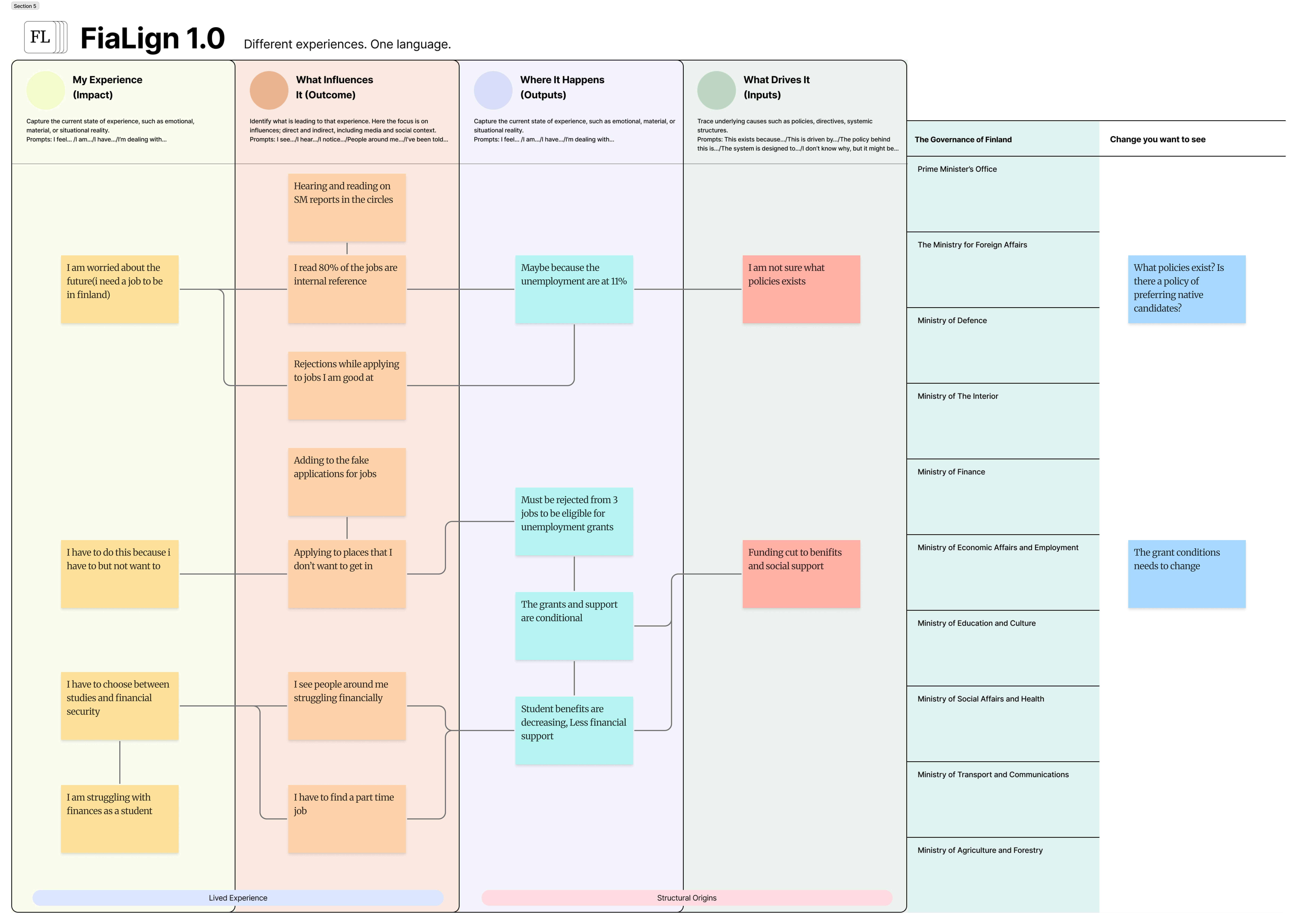
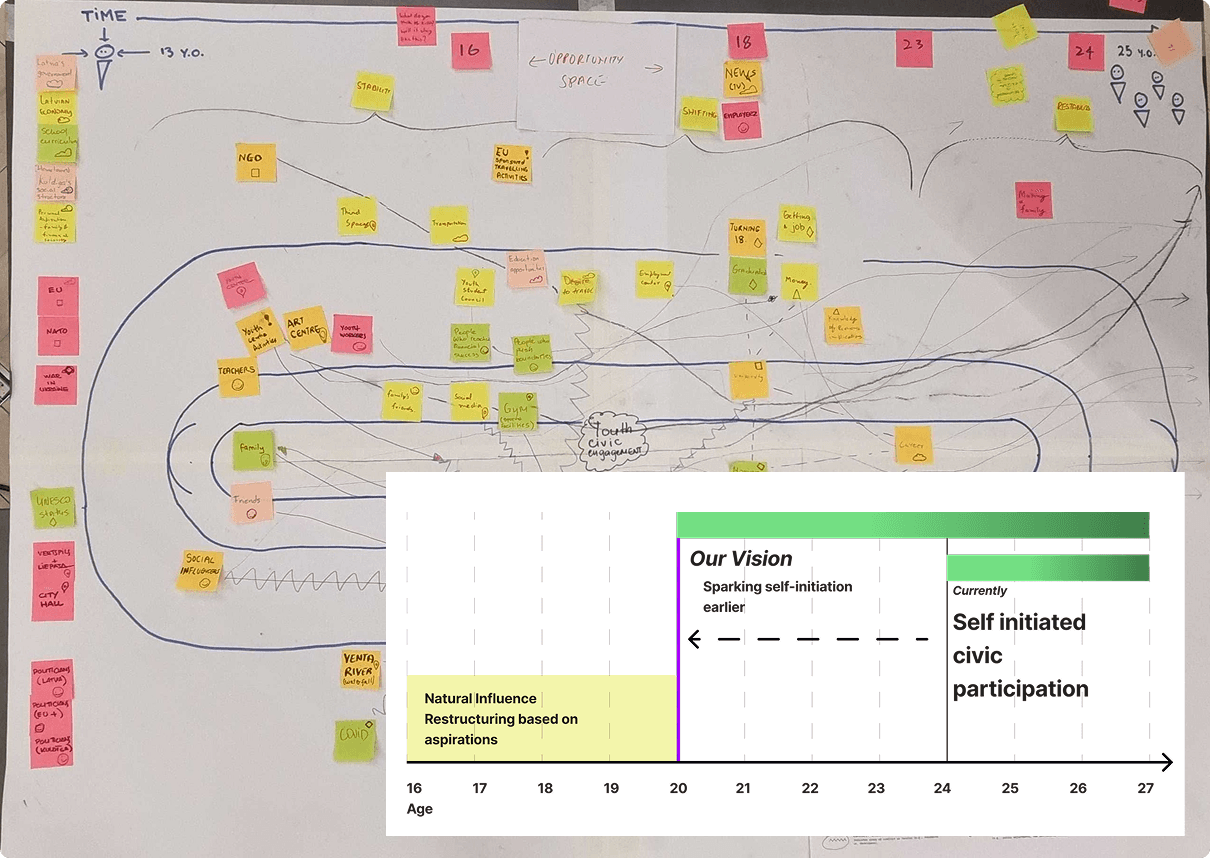
A custom gigamap — a stakeholder map drawn across time, not a single moment — exposed exactly where an intervention could land and what medium would fit it. Every decision that followed came from reading that map.
How ECHO got made — process, role, and what changed
Young people (18–24) in Latvia remain largely disengaged from formal civic and political processes, despite numerous youth programs and civic initiatives. While the youth show enthusiasm in community activities, their participation rarely translates into meaningful impact or policy influence. The youth participation in elections are at approx. 35% in Latvia.
Previous research report young people in Latvia care about their communities and are disengaged. European Movement Latvia came to us with an open brief: increase youth civic engagement.
The project followed the Double Diamond — structured, iterative, and deeply participatory. Each phase was tested against desirability, viability, and feasibility before committing to the next direction.
Discover
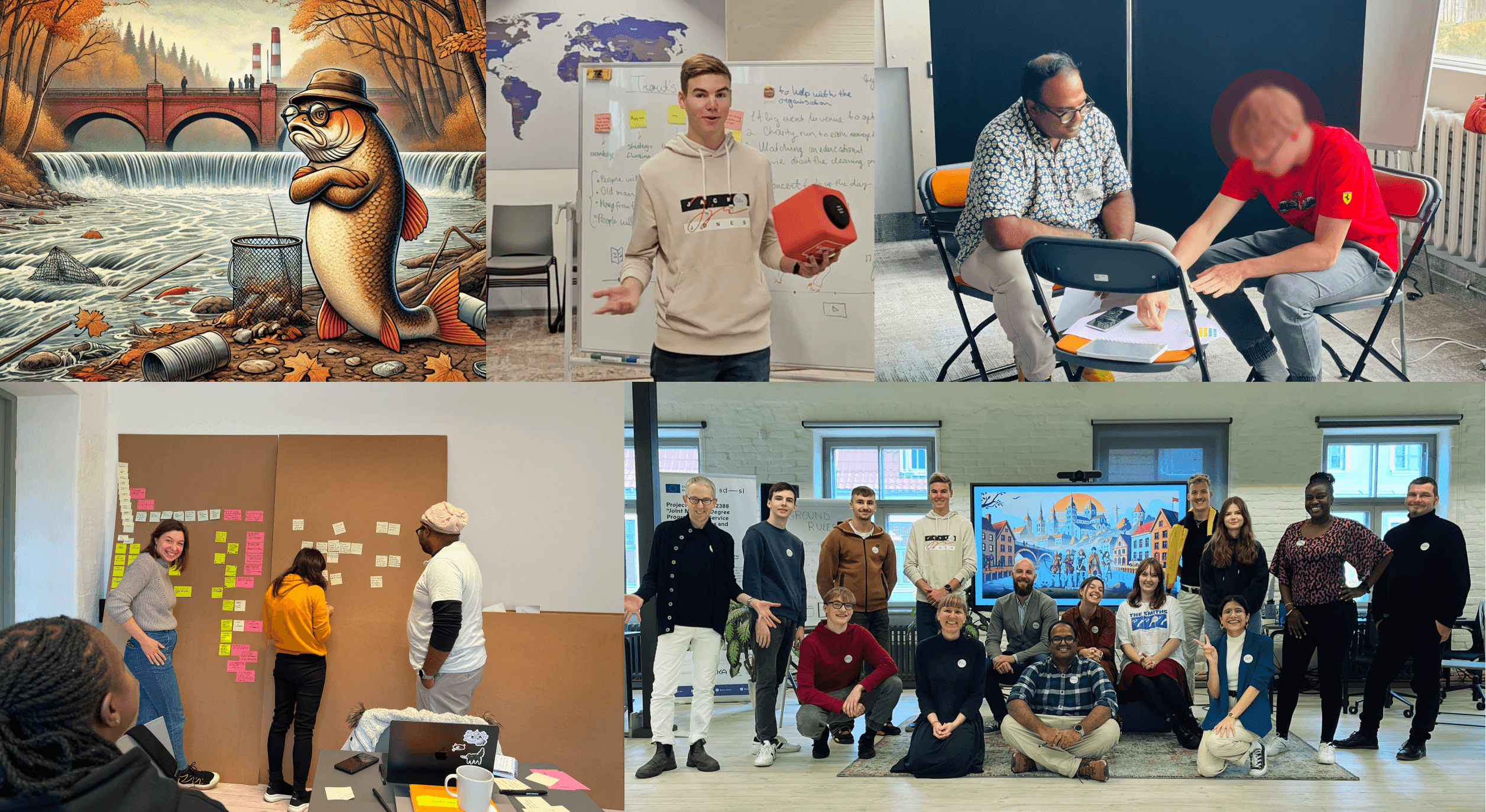
21 interviews with youth and adults, digital diaries, and a city-map workshop in Kuldīga. The work wasn’t testing hypotheses — it was listening for emotional undercurrents. Research was tested for desirability: did the problem resonate with the people living it?
Latvian youth inherit declining civic values from family. But their community care is real and strong.
Define
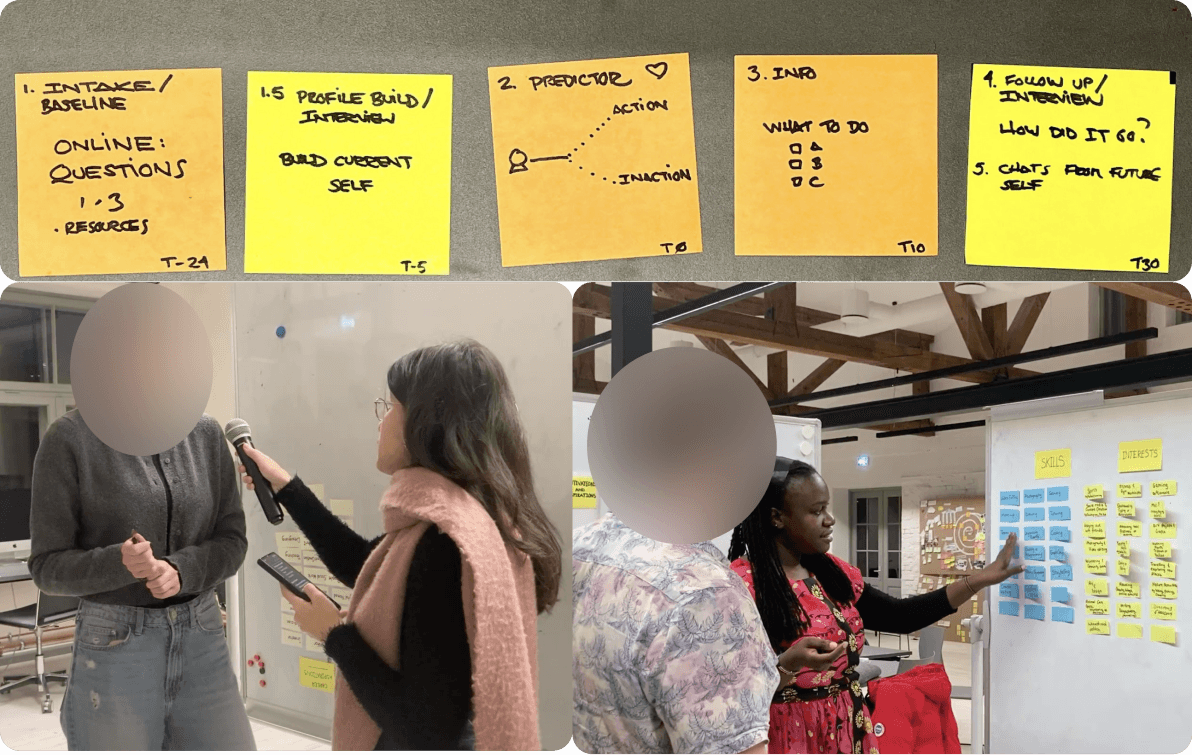
Built a custom gigamap tracing how the influences on civic identity shift across life stages — family to peers to work. Mapping the system across time, not just across stakeholders, exposed a specific window: ages 16–19, when career imagination begins. Feasibility was assessed against a 12-week timeline and a student team. Confirmed the finding by a gamified co-creation workshop.
Personal relevance is the strongest driver of youth engagement; civic agency emerges late (ages 24–30) when visibility of societal pressures grow.
Develop
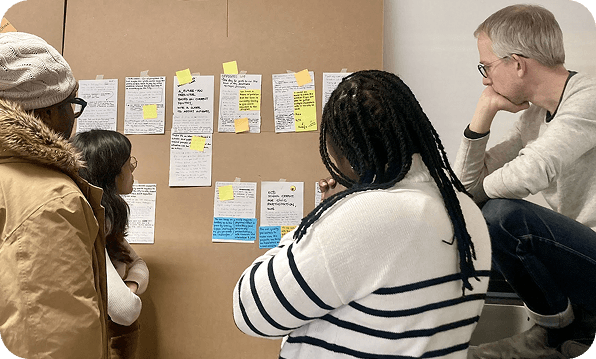
Rather than build finished infrastructure, the team chose a Wizard-of-Oz prototype — a human-operated simulation using ChatGPT — to test emotional resonance before committing to technology. A deliberate viability call: prove the experience, then build the tech. Co-creation workshops let youth respond to local challenges using their own skills, surfacing the core concept.
“Future you” — personal narrative is the entry point to civic imagination.
Deliver
Tested the full workshop with 5 young participants across all three lenses: desirability (did it resonate?), viability (could it run in schools?), and feasibility (could the toolkit be replicated without the original team?). Designed a two-phase rollout — a facilitation kit for schools, and a self-guided digital platform concept for scale.
Emotional resonance came first. Scalability was designed around what worked.
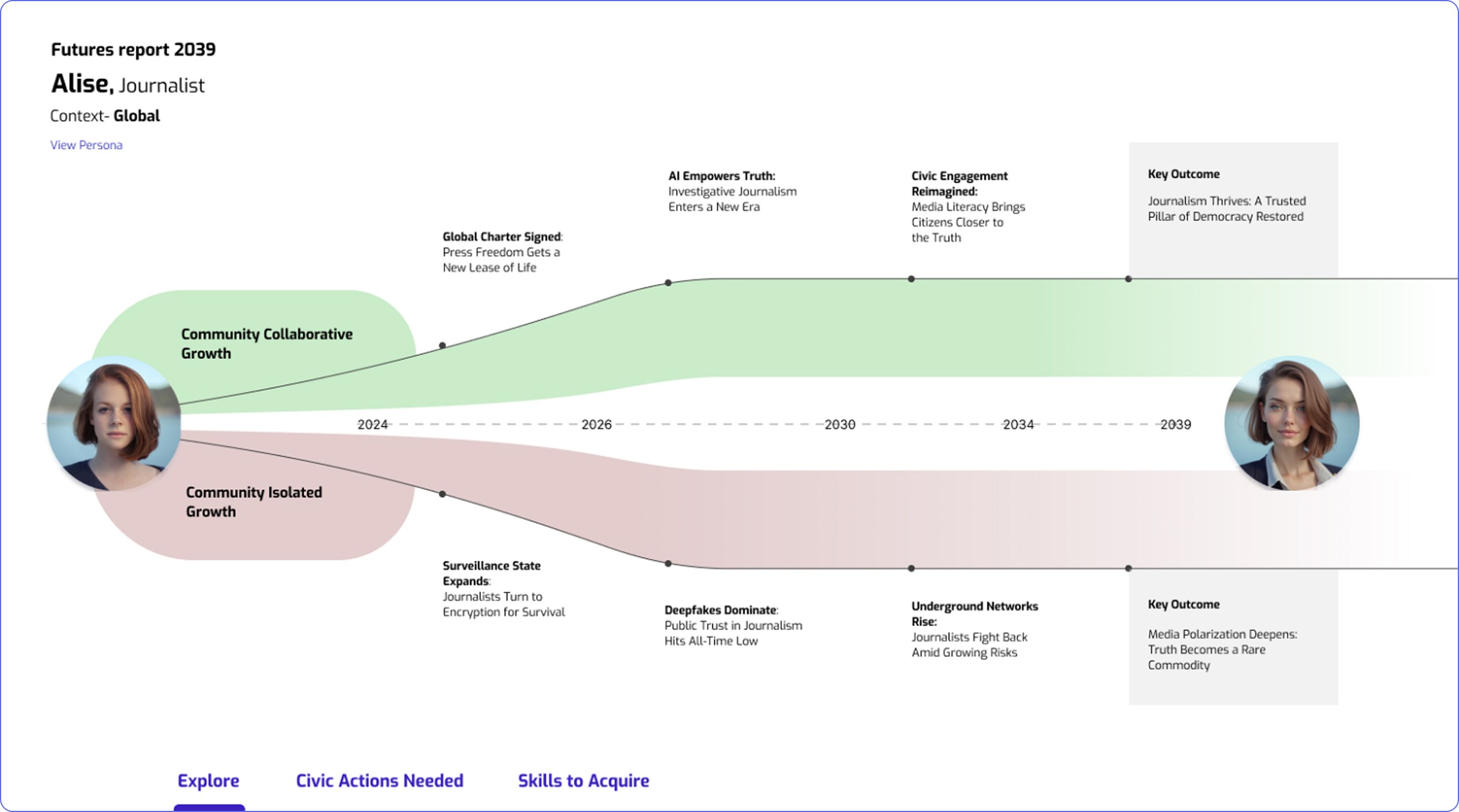
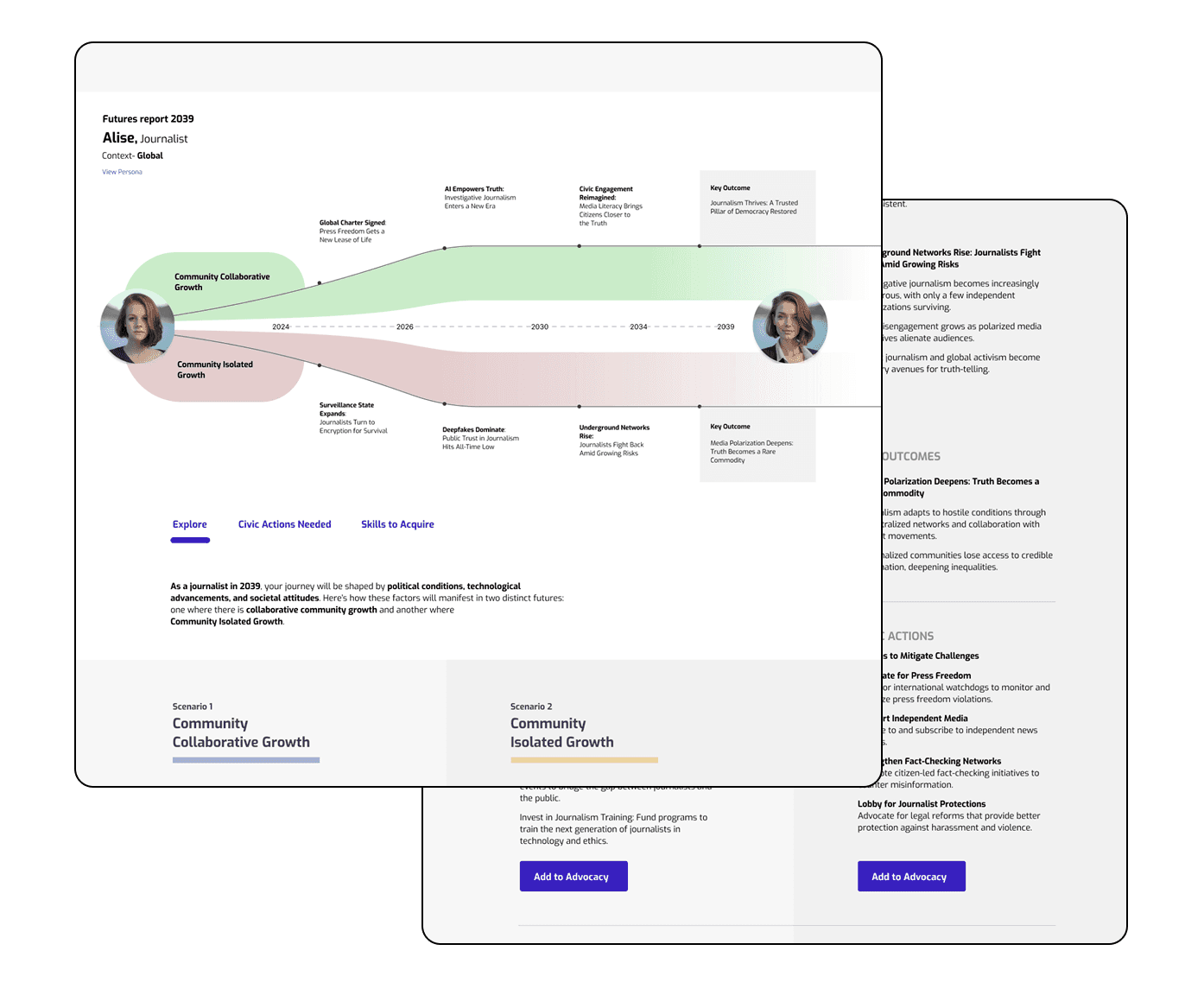
ECHO is a facilitated workshop — a guided, AI-assisted journey through two alternate future scenarios built from each participant’s own career aspirations. Each session produces a personalised “Letter from the Future”: a speculative narrative showing what their professional life looks like with and without civic engagement.
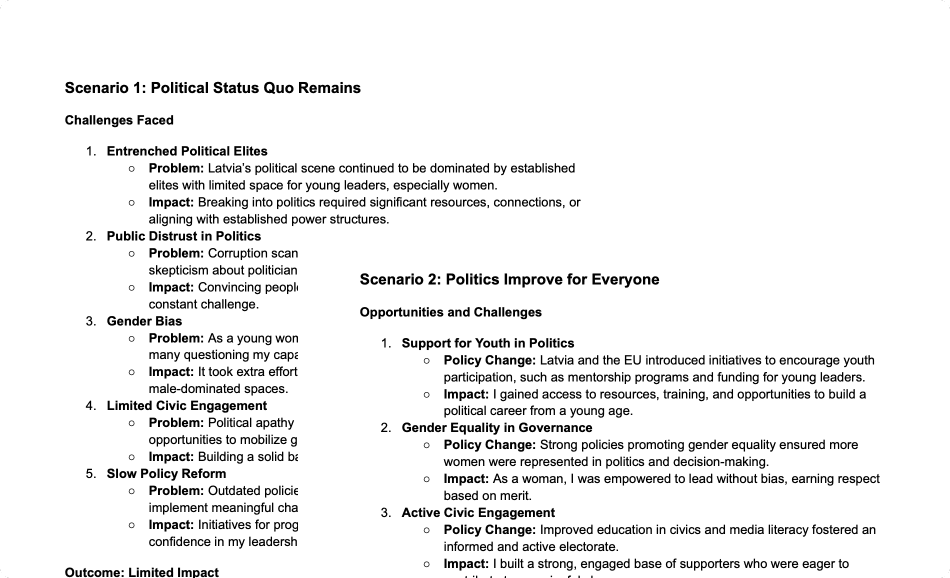
It made me think about what kind of career I want in the future and how to merge it with the things I care about.
ECHO sparked the civic imagination. Participants left not with a political opinion but with a new frame: their future is already entangled with the society they live in. For me, the project proved that AI isn’t just a prototyping shortcut — used carefully, it can make abstract systems feel intimate and urgent.
What I’d do differently
The workshop was tested once, with five participants, by the team that designed it. That validates resonance, not replicability. Before the school rollout, the facilitation toolkit needs co-design with teachers across at least two pilots — the people who’ll run it aren’t the people who built it, and the toolkit has to hold without us in the room.
What I learned
Mapping a system across time, not just across stakeholders, is what turned a vague brief into a precise design. The gigamap didn’t just describe the problem — it located the intervention and named the medium. That’s the move I’d reach for first on any ambiguous systemic brief.